
DAILY BRIEFING
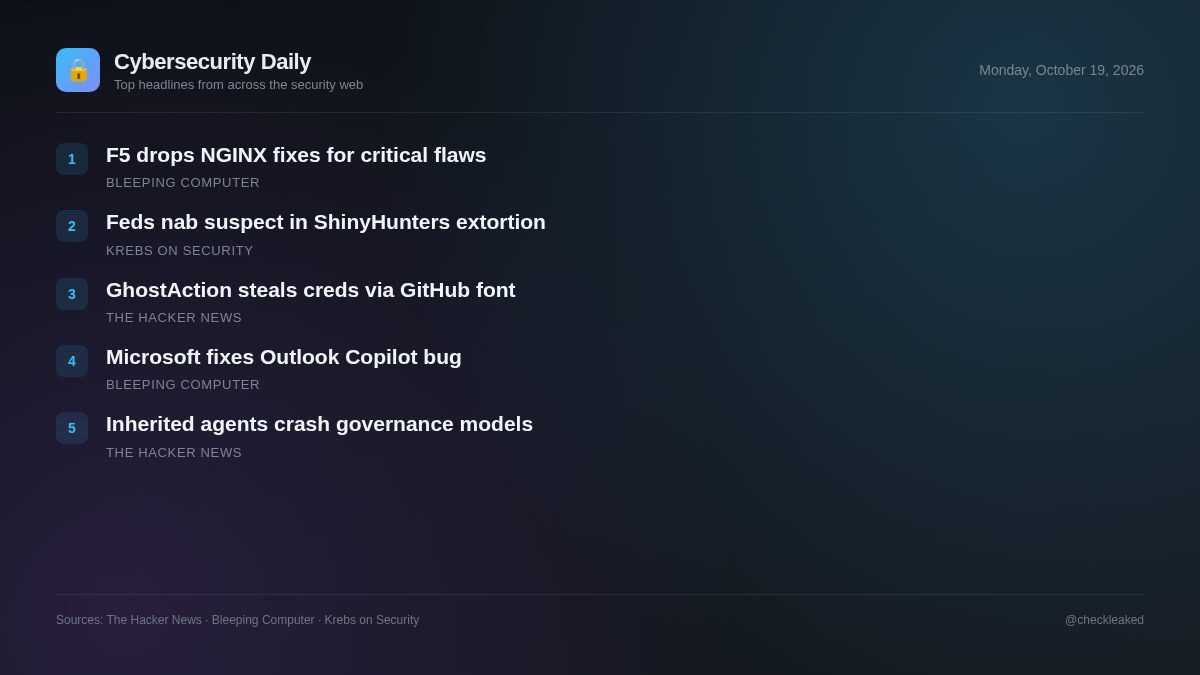
F5 releases out-of-band patches for critical NGINX vulnerabilities
Federal probes into ShinyHunters extortion intersect with software supply chain attacks and agentic AI prompt risks.
5 stories2 min read
Investigators probing the ShinyHunters extortion campaign after the FBI recruitment site breach have tied ransomware negotiators directly to the group's infrastructure. Signal communications intercepted during a key suspect's arrest in the Netherlands provided investigators with direct visibility into extortion operations and high-profile negotiations.
At the same time, software development teams face operational risks across both traditional supply chains and emerging AI tools. Attackers behind the GhostAction campaign are actively distributing credential-stealing malware disguised as font files across dozens of GitHub repositories, while enterprise implementations of Salesforce Agentforce risk exposing internal AI agent prompts to unauthenticated input via standard intake flows.
Feds Suspect Ransom Negotiator Ran ShinyHunters Extortion Site
U.S. federal investigators suspect an executive at a ransomware negotiation firm helped the ShinyHunters extortion group operate a pressure website to coerce victim payments. The investigation follows recent arrests and a breach of the FBI recruitment website, which compromised sensitive employee details.
- Why it matters
- Organizations negotiating extortion payments risk interacting with entities directly affiliated with or enabling ransomware groups.
- What to do
- Review third-party ransomware negotiation firm vetting processes and incident response protocols.
GhostAction Attackers Plant Credential Stealer Disguised as Font in 94 GitHub Repositories
The GhostAction threat actor expanded its supply chain campaign by planting a credential-stealing malware disguised as a font file across 94 GitHub repositories. The attackers also registered spoofed domain infrastructure to serve as exfiltration endpoints after GitHub mitigated previous workflow injection tactics.
- Why it matters
- Open-source maintainers and developers using compromised GitHub repositories risk credential theft and compromised build environments.
From Email-to-Case to the Boardroom: How Inherited Agents Break Governance Built for Software
In Salesforce Agentforce, the recommended way to make an agent respond to events is a Flow: a record is created or a case is updated, and the Flow passes data into the agent's prompt.
- Why it matters
- Enterprise AI agent implementations relying on existing intake workflows may expose AI logic to indirect prompt injection and unintended autonomous actions.
F5 releases out-of-band patches for critical NGINX vulnerabilities
F5 has released out-of-band security patches to address multiple NGINX web server flaws, including three critical-severity vulnerabilities that can let attackers execute code on vulnerable systems.
- Why it matters
- No details provided in source context.
Microsoft fixes classic Outlook bug that hid Copilot buttons
Microsoft has fixed a known issue that removed the Copilot Chat and Copilot buttons in the classic Outlook desktop mail client for some Windows users.
- Why it matters
- No details provided in source context.
Key takeaways
- Federal investigators tied ransom negotiators to the operation of ShinyHunters extortion infrastructure.
- The GhostAction campaign is hiding credential stealers in fake font files across 94 GitHub repositories.
- Salesforce Agentforce flows exposed to public Email-to-Case triggers allow unauthenticated prompt injection.