

DAILY BRIEFING
N-able N-central Exploited, DarkSword iOS Kit Leaked, Thermo Fisher Patches DNA Flaw
Today's briefing covers active N-able server takeovers, iOS exploitation via the leaked DarkSword kit, DNA file tampering fixes, and UK police data exposed online.
5 stories3 min read
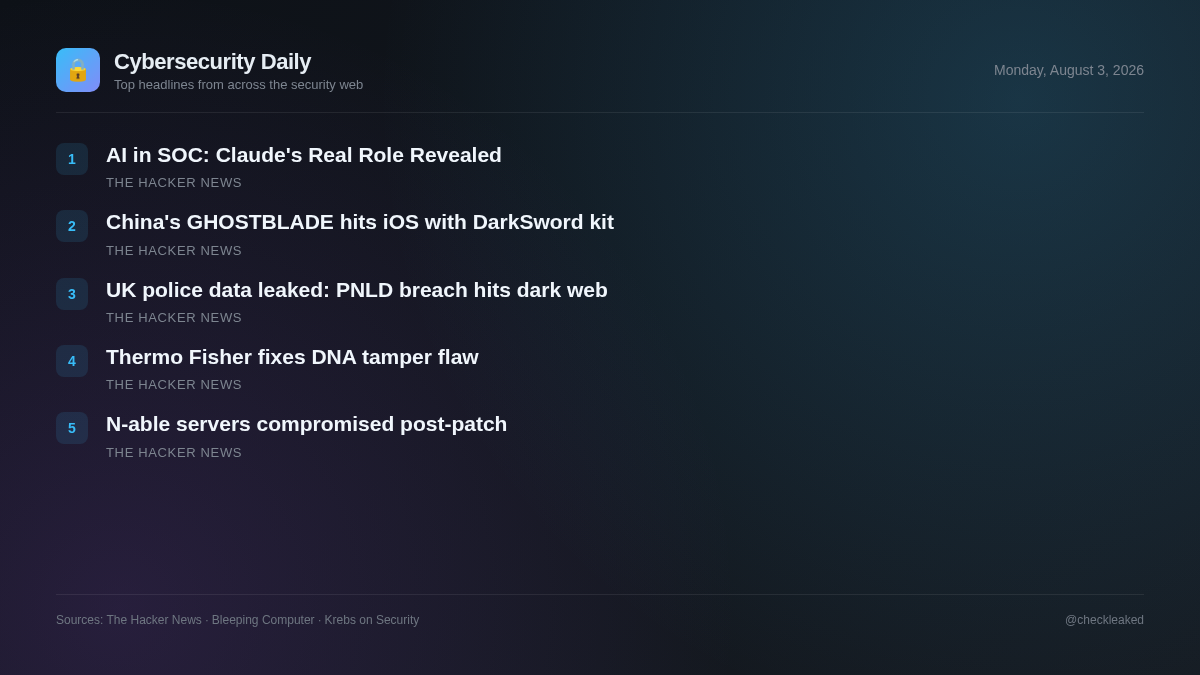
Managed infrastructure and mobile devices face heightened exposure today as attackers leverage active authentication bypasses and leaked exploit frameworks. Managed service providers must prioritize N-able server remediations, as incomplete initial fixes allowed threat actors to gain remote administrative control and install persistent Cloudflare tunnels on managed endpoints.
N-able Says Attackers Take Over N-central Servers After Initial Fix Proves Incomplete
Attackers exploited an authentication bypass flaw (CVE-2026-18577) in N-able N-central to gain remote administrative control over servers and client systems. After initial fixes proved incomplete, N-able released build 2026.3.1.7 to stop attackers who were establishing persistent Cloudflare tunnels on endpoints.
- Why it matters
- Managed service providers using vulnerable N-central builds risk full infrastructure takeover and persistent backdoors deployed across managed customer networks.
- What to do
- Update N-central to build 2026.3.1.7 immediately and inspect managed endpoints for unauthorized persistent Cloudflare tunnel services.
Chinese Threat Actor Uses Leaked DarkSword Kit to Deploy GHOSTBLADE on iOS
An unknown Chinese threat actor is utilizing a leaked version of the DarkSword exploit kit to target Apple iOS devices running versions 18.4 through 18.7. Research identified over 100 web properties hosting fake Amazon Web Services sign-in portals and the exploit toolkit to deploy GHOSTBLADE malware.
- Why it matters
- Mobile users running vulnerable iOS versions face targeted exploitation and credential theft via malicious watering hole sites hosting fake AWS login forms.
- What to do
- Update iOS devices past version 18.7 and monitor web traffic for connections to suspicious infrastructure hosting fake cloud login pages.
Thermo Fisher Patches Flaw That Could Make DNA File Tampering Nearly Undetectable
Thermo Fisher Scientific patched CVE-2026-17583 (CVSS 8.2) in select Applied Biosystems human identification software. The flaw allowed unauthorized modifications to .fsa and .hid files before analysis. Supported products received digital signature updates, while end-of-life products will not receive patches.
PNLD Breach Exposes U.K. Police and Government Contact Details on Dark Web
The Police National Legal Database (PNLD) reported a data breach discovered on July 26 that exposed contact information on the dark web. The compromised data includes names, organizations, and work email addresses of police personnel, criminal justice professionals, and Ask the Police inquiry submitters.
- Why it matters
- Exposed work email addresses and official identities increase the risk of convincing, targeted spear-phishing campaigns against UK law enforcement personnel.
- What to do
- Alert staff to heightened phishing risks and monitor organizational email channels for targeted social engineering attempts.
FOMO in the SOC: Where AI Platforms like Claude Actually Fit
Security teams are increasingly using AI platforms like Claude, Codex, and Cursor to write detections, investigate alerts, summarize incidents, and automate workflows. As AI capabilities evolve rapidly, enterprise security leaders must determine where each AI tool provides the greatest operational value in the SOC.
- Why it matters
- Understanding specific AI tool capabilities helps SOC leaders deploy effective automation while threat actors simultaneously utilize AI for phishing and malware creation.
Key takeaways
- Update N-able N-central to build 2026.3.1.7 immediately to address the incomplete authentication bypass fix in CVE-2026-18577.
- Monitor iOS devices for watering hole compromises leveraging the leaked DarkSword exploit kit targeting iOS 18.4 through 18.7.